
Surface treatment
You choose which surface treatment your tombstone should have. We recommend a polished surface if you want minimal maintenance and a nice tombstone over time.Such a surface later grows with lichen and moss, at the same time it is smooth (dense) and therefore easy to clean.
Stones with a sandblasted, hewn or natural surface are more open and provide a better breeding ground for lichen and moss, which is also nice in its own way.
- POLISHED SURFACE

Polished surface is high-gloss, which means that the stone's structure and color stand out well. This is the most commonly used surface on tombstones.
This is an almost maintenance-free surface, it is easy to clean, while moss and lichen are difficult to heal.
Stones marked with POLISH have only polished front (Mostly sandblasted edges and back) which is most common.
Stones marked with FULLY POLISHED have all sides polished which gives a very exclusive look. - SMOOTH SANDED SURFACE

The surface should not normally have visible marks from grinding, but it can occur especially on dark stones and in bright ligh.
The surface is sanded smooth without unevenness, but not high-gloss. A colorful surface where the stone's structure and color emerge. - SANDBLASTED SURFACE
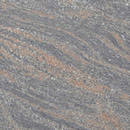
This is the usual surface treatment for the back and edges if the tombstone is not fully polished.
It gives a smooth, completely matte and slightly rough surface.. - NATURAL SURFACE & FLAMMED SURFACE
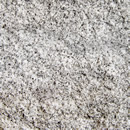
Flaming (burning) of stone is used on sawn surfaces.
This weathers the stone and the surface becomes almost as natural, matte and rough - ROUGHED EDGE
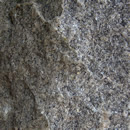
This is a roughly hewn natural surface with greater or lesser irregularities.
It is preferably used for coarser form-cutting of the edges of tombstones. - PIKET SURFACE
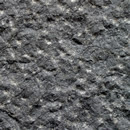
he surface is chiseled with a chisel with a slightly coarser point of impact.
This gives a rough surface with good contrast to polished and sanded surfaces. - FINELY CHOPPED SURFACE
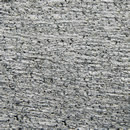
The surface is chiseled / hammered with a fairly shallow and dense impact point. Use a toothed stud hammer with a distance between the teeth of 5 - 10 mm
a grainy surface is obtained. With a flat chisel (without teeth) and tight strokes, a knurled surface is achieved. Both methods give a smooth and rough surface and
good contrast to polished and sanded surfaces that are usually more colorful.